


Sawdust Moisture
Contact Us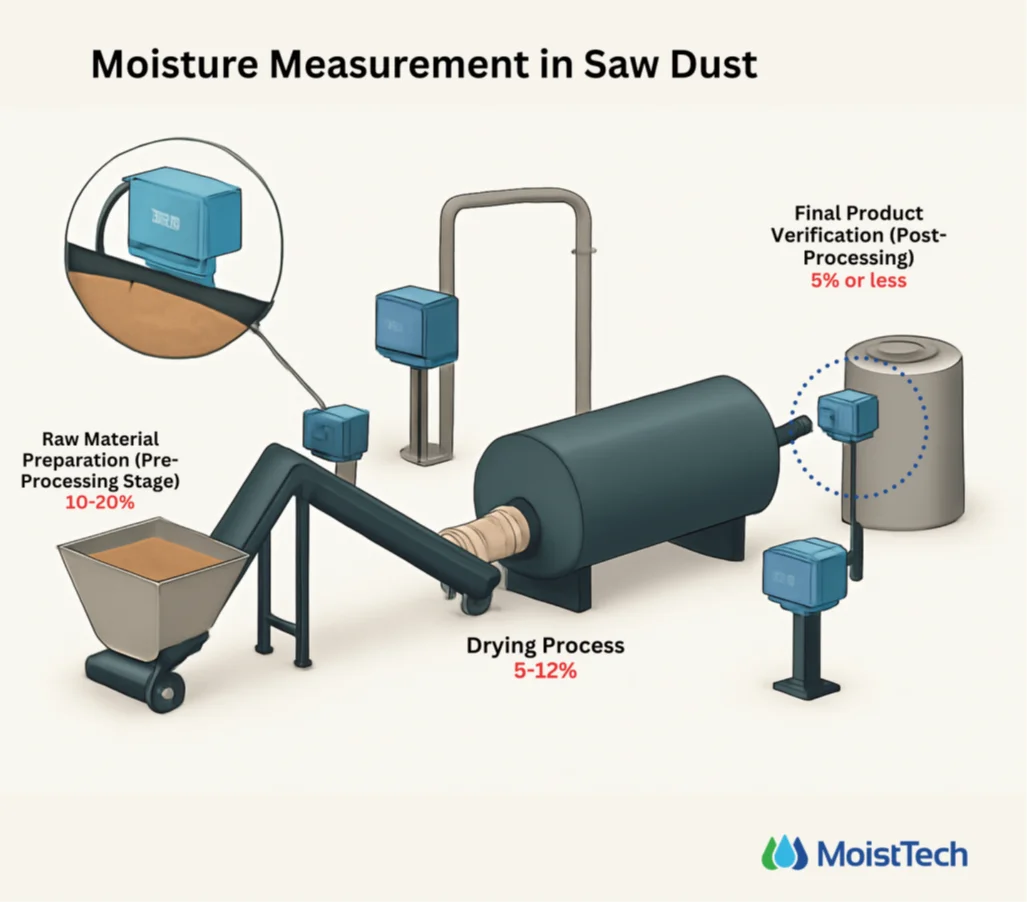

Overview
Sawdust is a by-product of woodworking and is widely used in various industries, including the production of composite materials like particleboard and wood pellets. The moisture content of sawdust is a critical factor in its processing, as excess moisture can cause clumping, inefficient drying, and inconsistent product quality.
The IR-3000 Near-Infrared (NIR) Moisture Sensor provides precise, real-time moisture measurements, helping manufacturers optimize processing conditions and improve product quality.
Why Measure Moisture
Accurate, real-time moisture monitoring delivers multiple process and product benefits.

Quality Assurance

Energy Efficiency

Reduce Waste

Process Stability
RECOMMENDED MEASUREMENT LOCATIONS
1. Raw Material Collection (Pre-Processing Stage)
Moisture Range: 10–20%
Sensor Placement: At the collection point of raw sawdust as it is produced during wood cutting or planing.
Benefit: Ensures the sawdust entering the process has the optimal moisture level for further processing and helps prevent drying issues downstream.
2. Drying Process
Moisture Range: 5–12%
Sensor Placement: During the drying process, as sawdust is exposed to heat to reduce moisture content.
Benefit: Continuous monitoring helps ensure the sawdust is dried to the correct level without excessive energy use.
3. Final Product Verification (Post-Processing)
Moisture Range: ≤ 5%
Sensor Placement: After the sawdust is processed into its final product form, whether for use in particleboard, wood pellets, or other applications.
Benefit: Verifies that the final product meets moisture specifications for storage or use and remains consistent in quality.
Understand the Process
Wood fiber moisture can affect many aspects of wood or wood-based products. Those involved in the manufacturing of wood fiber products need to have accurate readings on moisture content to deliver top-quality products to their customers.