Quick Stats Report
10 – 15%
Initial Estimated Waste each month before improvements
2 Webs
Measurement Points: Top and Base Paper Sheets Before Laminating
QUALITY Improvement:
SIGNIFICANTLY REDUCED: Customer Reported Warp Issues
PROCESS Improvement:
TIGHTER TOLRANCES: Moisture targets established with paper suppliers
The Challenge
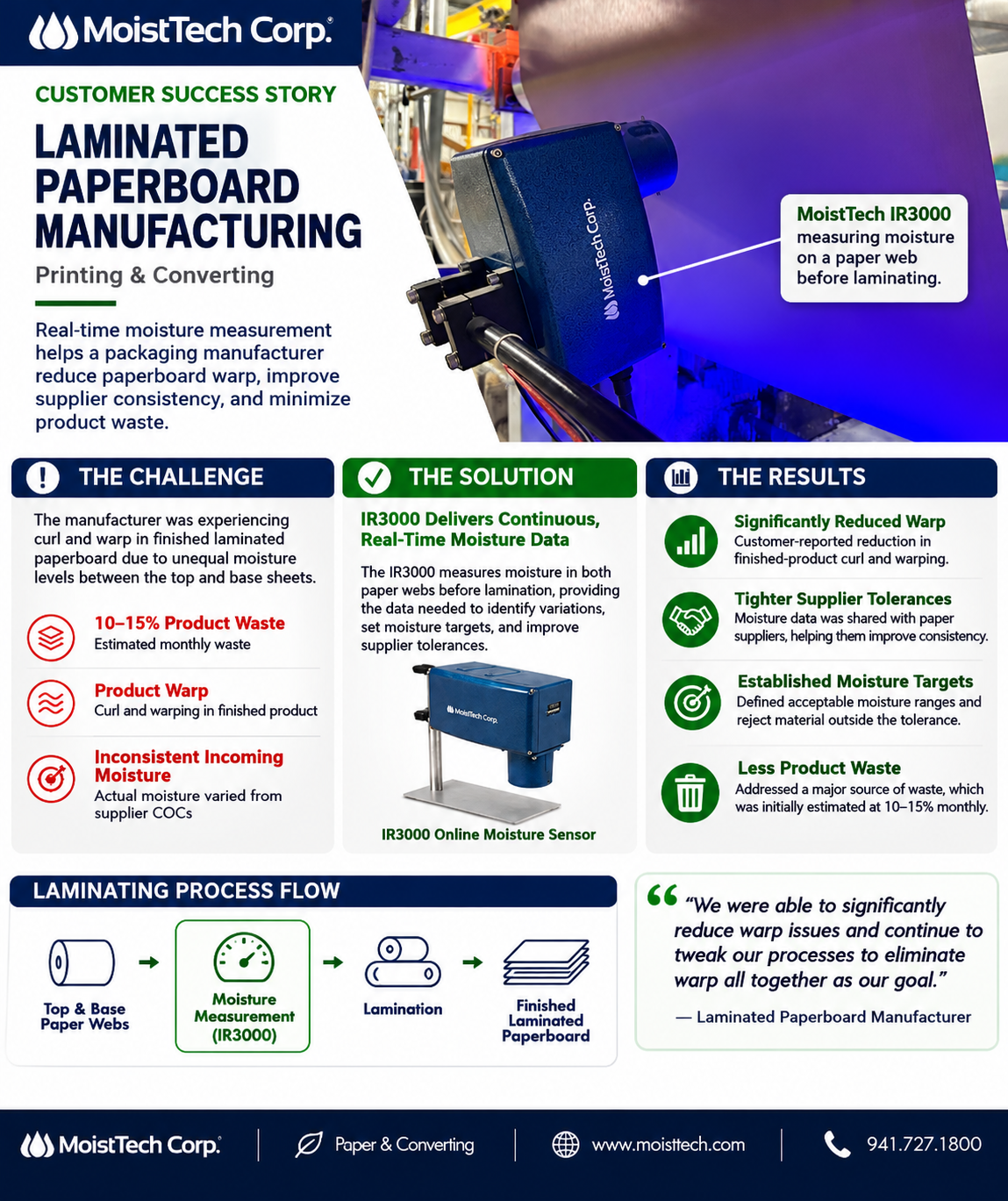
Curl & Warping: A manufacturer of heavyweight laminated paperboard for retail and club-store packaging was experiencing curl and warping in finished products.
The facility determined that unequal moisture levels between the top and base paper sheets were contributing to these defects. Although operators had established standard procedures for web tension, adhesive coat weight, and steam settings, moisture inconsistencies continued to affect product quality.
The manufacturer also relied on Certificates of Conformance (COCs) from its paper suppliers to establish incoming moisture expectations. However, actual material conditions did not always match the reported values. With estimated monthly product waste of 10–15%, the facility needed a more reliable way to identify moisture variations before the two paper webs entered the laminating process..
The Solution
IR3000 Sensor
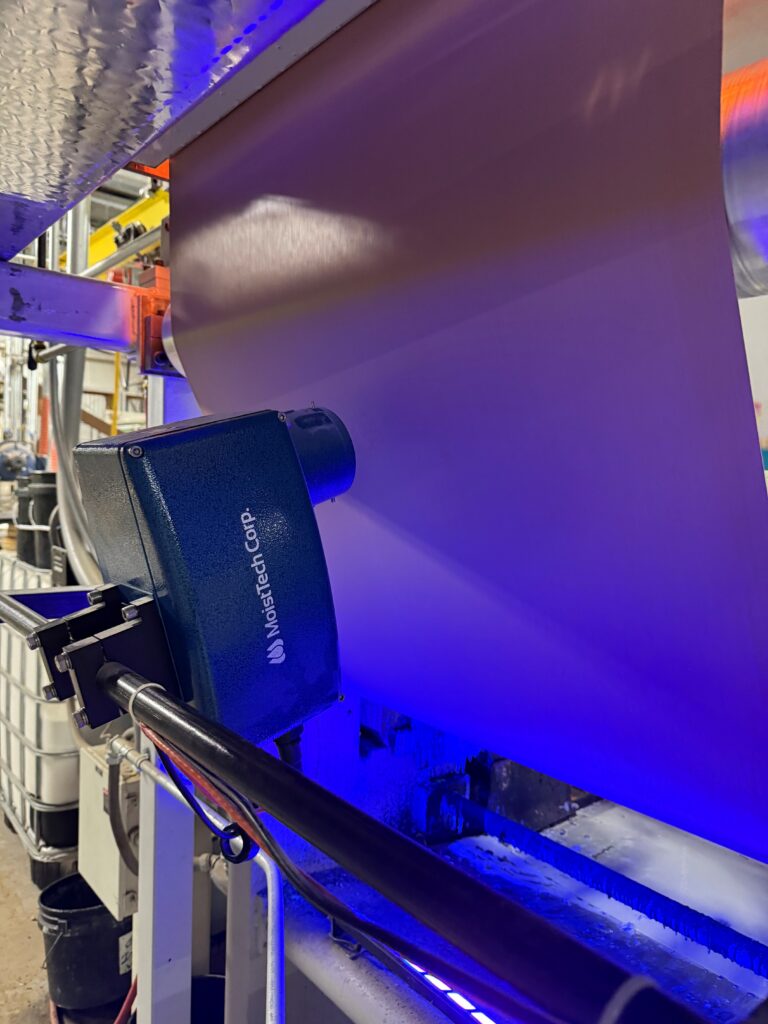
The facility implemented MoistTech’s IR3000 Near-Infrared Moisture Measurement technology to monitor moisture content in the top and base paper webs before lamination.
By collecting moisture measurements from both substrates, the manufacturer could identify differences between the two sheets and determine which moisture conditions contributed to finished-product curl and warping.
The customer charted the moisture variations and shared the findings with its paper suppliers, providing objective process data that helped suppliers tighten their moisture tolerances.
The facility then established acceptable moisture targets and tolerance ranges for incoming paper, using ongoing measurements to identify and reject material outside its established specifications.
The Results
Significantly Reduced Paperboard Warping: By identifying moisture imbalances between the top and base sheets, the manufacturer significantly reduced finished-product curl and warping.
Improved Supplier Quality Control: Actual moisture measurements revealed variations from supplier Certificates of Conformance. Sharing this data encouraged suppliers to tighten their moisture tolerances and improve incoming material consistency.
Established Moisture Acceptance Standards: The facility developed moisture targets and acceptable tolerance ranges, allowing operators to identify and reject paper outside established specifications before it created additional production problems.
Better Process Understanding: Continuous moisture data helped the manufacturer determine which material conditions contributed to warping, supporting more informed quality-control decisions and ongoing process improvements.
Reduced Risk of Product Waste: With initial monthly waste estimated at 10–15%, improved moisture control addressed a major source of product defects. The customer confirmed that warp issues were significantly reduced, although a final waste-reduction percentage was not provided.