



Overview
Gypsum, both mined and industrially produced, is water-soluble, making moisture measurement and control critical during every stage of production. Moisture content directly affects product usability, energy consumption, and drying efficiency. Whether producing raw gypsum, calcined plaster, or gypsum board, precise moisture control ensures consistent quality and prevents production issues such as warping, brittleness, and delamination.
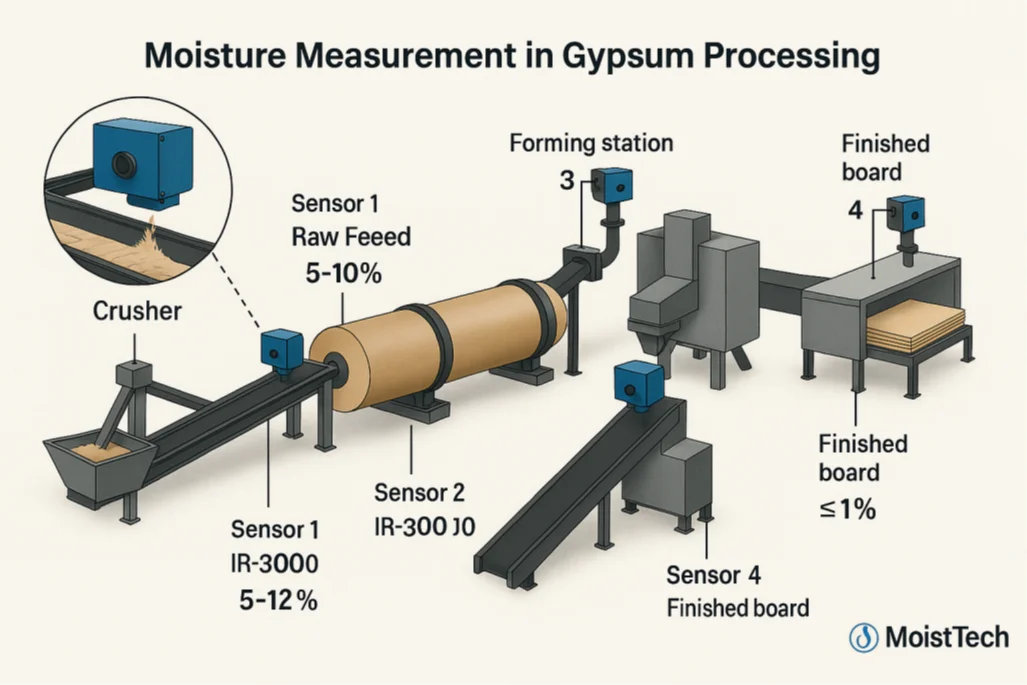
Once mined, gypsum is crushed and conveyed to a rotary drum dryer, where approximately 5–10% of its natural moisture is removed. Monitoring the moisture content of the incoming gypsum rock allows operators to optimize dryer temperature and fuel use, ensuring stable drying performance.
After further processing, gypsum enters a board-forming station, where it is shaped, cut, and moved through a multi-zone drying kiln. Throughout this stage, accurate and efficient moisture monitoring is critical to prevent warping or shrinkage, paper delamination, soft or brittle edges, and inconsistent curing and drying times. Maintaining ideal moisture levels throughout ensures the highest quality gypsum board with minimal energy waste and downtime.
Why Measure Moisture
Accurate, real-time moisture monitoring delivers multiple process and product benefits.

Quality Assurance

Energy Efficiency

Reduce Waste

Process Stability
RECOMMENDED MEASUREMENT LOCATIONS
Raw Feed
Monitors incoming gypsum moisture at approximately 5–10% before drying.
Post-Dryer
Verifies moisture after drying to support stable downstream processing.
Forming Station
Measures moisture during board forming to maintain consistency before kiln drying.
Finished Board
Verifies final board moisture at ≤1% before completion.
Understand the Process
Gypsum moisture varies depending on the source of its deposit (e.g., seawater, volcanic vapors, an industrial byproduct, etc.) and the requirement of its final application or product (e.g., agricultural soil amendment, gypsum wallboard, concrete, etc.)