


Hardboard Moisture

Overview
Hardboard is a dense engineered wood product manufactured from compressed wood fibers under high heat and pressure. It is widely used in furniture, paneling, and industrial applications requiring strength and durability.
Maintaining proper moisture content is essential in hardboard production to achieve the required density, surface finish, and structural performance. The IR-3000 Near-Infrared (NIR) Moisture Sensor provides accurate, real-time, non-contact measurement, enabling manufacturers to control moisture levels and ensure consistent product quality.
Why Measure Moisture
Accurate, real-time moisture monitoring delivers multiple process and product benefits.

Quality Assurance

Energy Efficiency

Reduce Waste

Process Stability
RECOMMENDED MEASUREMENT LOCATIONS
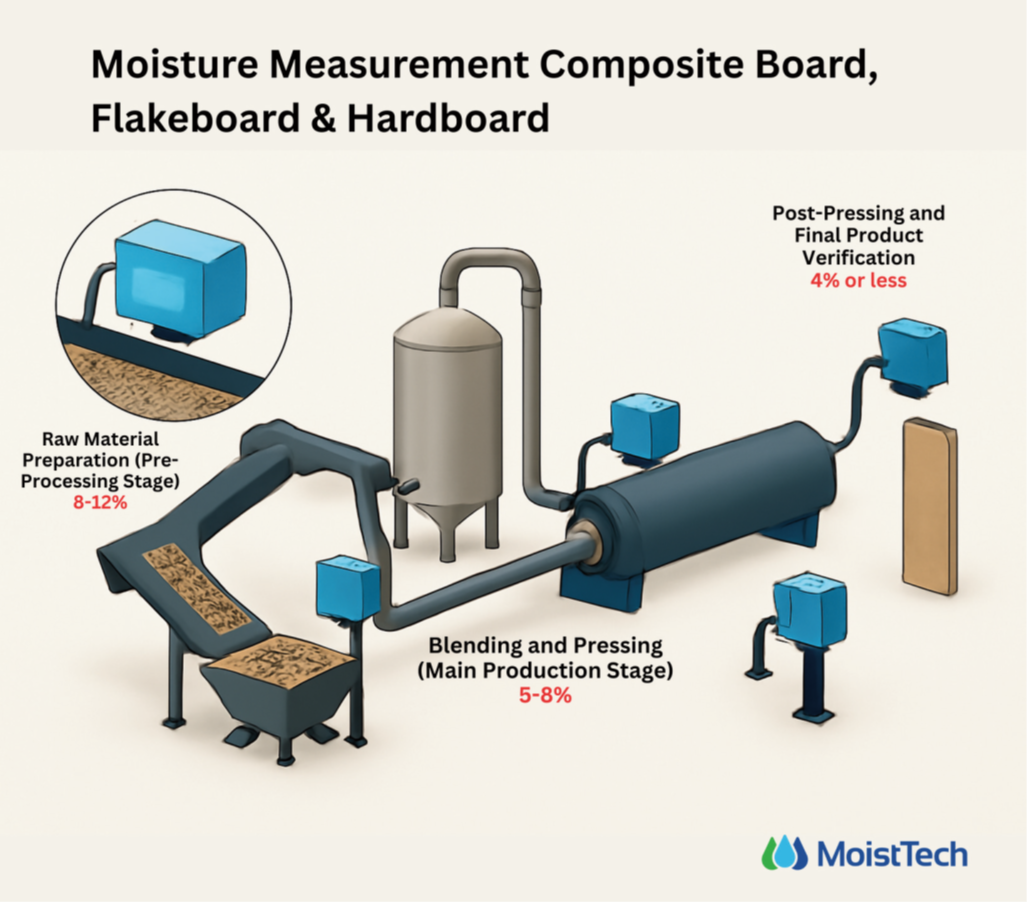
While the exact composition of hardboard can vary, the moisture measurement needs across these products are quite similar, focusing on raw material preparation, pressing, and final product verification:
Raw Material Preparation (Pre-Processing Stage)
- Moisture Range: 8–12% (varies depending on material type, e.g., wood chips, fibers, or flakes)
- Sensor Placement: In the hopper or conveyor belt system where the raw materials (wood fibers, chips, or flakes) are delivered for mixing.
- Benefit: Ensures that the raw materials are at the optimal moisture level before they are mixed with adhesives or resins, which affects the bonding and the pressing process.
Blending and Pressing (Main Production Stage)
- Moisture Range: 5–8%
- Sensor Placement: After the blending and mixing process, before the material enters the press for forming the boards.
- Benefit: Real-time monitoring of moisture content helps maintain consistency during the pressing process, ensuring that the boards are of the right density and strength without excessive shrinkage or cracking during drying.
Post-Pressing and Final Product Verification
- Moisture Range: ≤ 4%
- Sensor Placement: After the boards are pressed and before they are cooled, dried, or packaged for shipment.
- Benefit: Final moisture verification ensures that the product meets specifications for storage and end-use, preventing issues like warping, mold growth, or deformation.
Understand the Process
Our sensors come pre-calibrated to your exact application to ensure a plug and play operation, requiring little installation time. The IR3000 series sensors have Zero Drift, No Maintenance, reliable readings and come with 100% Satisfaction Guarantee.