



Overview
Why Measure Moisture
Monitoring moisture and oil in crackers and biscuits is critical.

Quality Assurance
Excess moisture leads to discoloration, poor texture, and
reduced shelf life

Energy Efficiency
Excessive moisture also extends bake
times, increasing energy usage and reducing throughput

Reduced Waste
Low moisture can result in brittleness and breakage

Process Stability
Real-time feedback allows operators to fine-tune the process immediately, reducing off-spec batches and rework

Safety
Uncontrolled oil content impacts flavor, appearance, and caloric
consistency
Typical Moisture Ranges
| Process Stage | Optimal Moisture Range |
|---|---|
| Incoming Dough | 15 – 25% |
| Oil Content | 10 – 20% |
| Finished Baked Product | 1 – 3% |
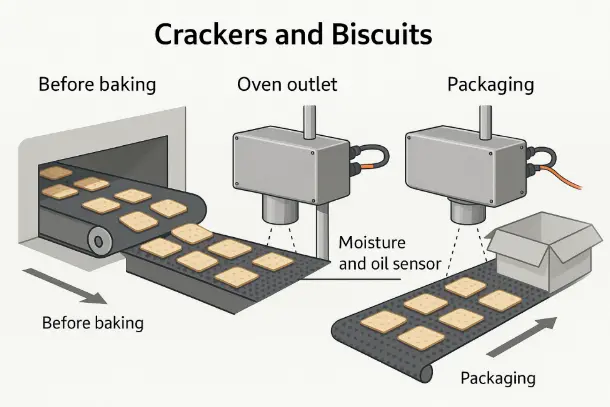
RECOMMENDED MEASUREMENT LOCATIONS
Moisture and oil levels are most effectively monitored:
- Before baking: to ensure proper dough conditioning and ingredient balance.
- After baking (oven outlet): to control drying, oil absorption, and product texture.
- Before packaging: allowing time for stabilization while preventing moisture regain or oil loss.
This measurement strategy ensures that each stage of the production line remains optimized for both process control and final product quality.
Understand the Process
During baking it is important to know the moisture and oil content after the fryer/oven outlet as they can affect quality and consistency, as well as the taste, appearance, stability, and shelf life.