



Overview
Polyvinyl butyral (PVB) sheet is widely used as an interlayer in laminated safety glass for automotive windshields, architectural glass, and specialty applications. Its performance is highly dependent on controlled moisture content, which directly affects adhesion, clarity, and mechanical properties.
Moisture plays a critical role in PVB processing and final product performance. Excess moisture can lead to bubbling, haze, and poor adhesion during lamination, while insufficient moisture can reduce flexibility and bonding strength.
Why Measure Moisture
Accurate moisture control in flexible packaging production ensures:

Quality Assurance
Maintains proper bonding
during lamination to prevent delamination.

Energy Efficiency
Supports consistent
extrusion and sheet handling.

Reduced Waste
Minimizes defects caused by improper moisture levels.

Process Stability
Enables immediate
adjustments to drying and conditioning systems.

Safety
Ensures reliable
safety and durability in end-use applications.
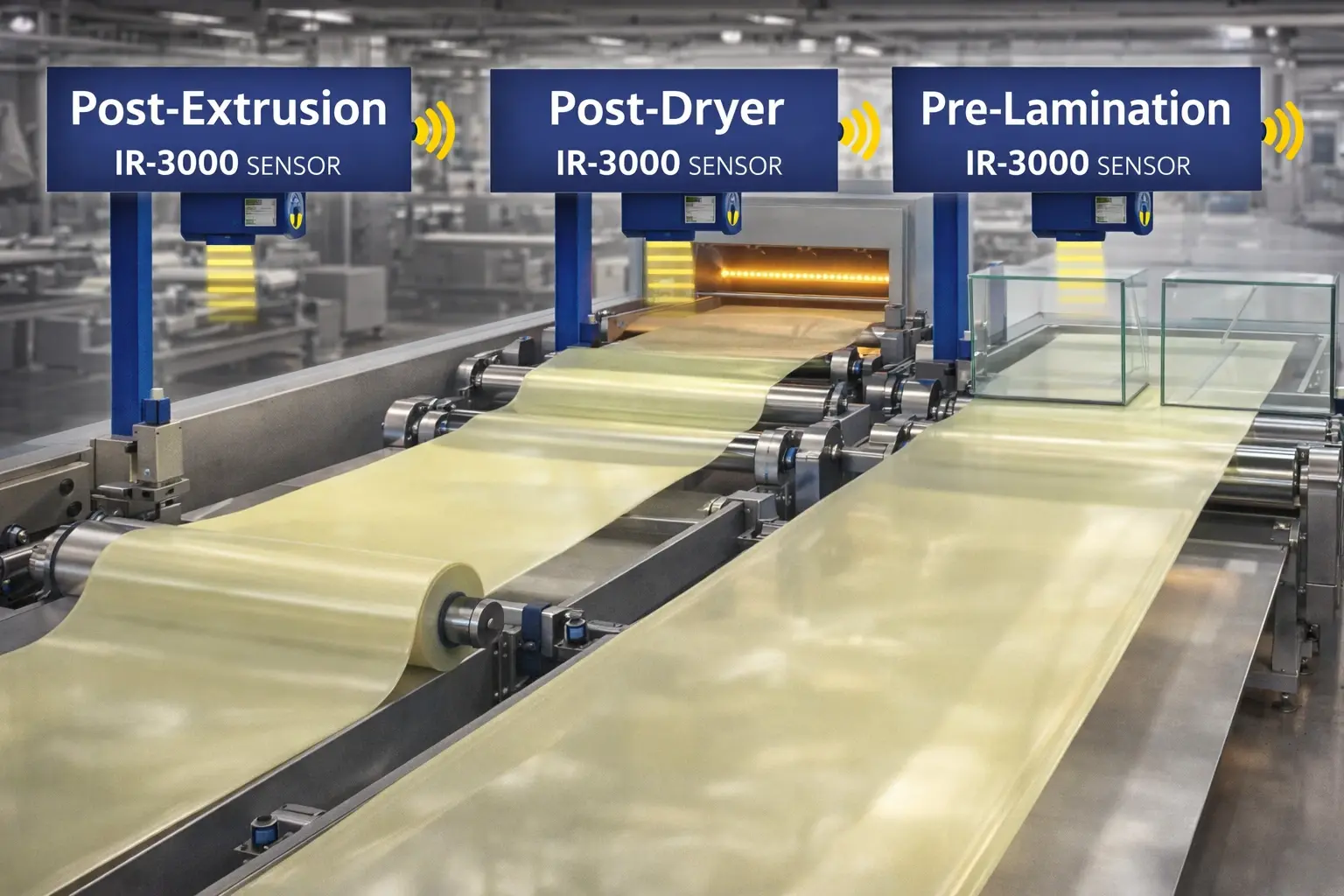
RECOMMENDED MEASUREMENT LOCATIONS
- Post-Extrusion / Sheet Formation: Measure moisture immediately after sheet formation to monitor initial conditions and ensure consistency.
- Post-Dryer / Conditioning Stage: Critical control point to verify moisture levels after drying or conditioning before storage or lamination.
- Pre-Lamination: Ensures optimal moisture content before the PVB sheet is applied between glass layers for proper adhesion and clarity.