



Overview
Wood shavings are produced as a by-product of wood processing and are widely used in industries such as animal bedding, biomass fuel production, and composite materials. Controlling the moisture content of wood shavings is essential to prevent clumping, ensure consistent performance, and maintain quality.
The IR-3000 Near-Infrared (NIR) Moisture Sensor provides precise, non-contact moisture measurements, helping optimize processing and improve the quality of wood shavings.
Why Measure Moisture
Accurate, real-time moisture monitoring delivers multiple process and product benefits.

Quality Assurance

Energy Efficiency

Reduce Waste

Process Stability
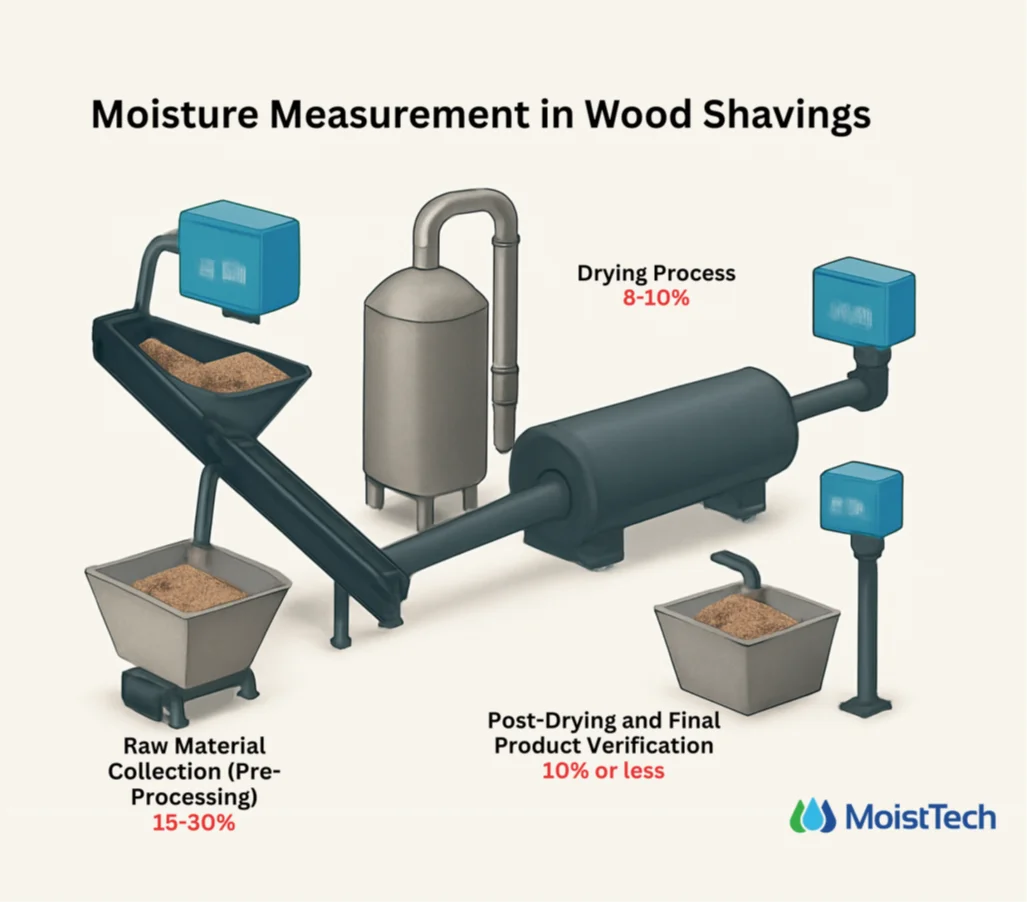
RECOMMENDED MEASUREMENT LOCATIONS
Raw Material Collection (Pre-Processing)
Moisture Range: 15–30%
Sensor Placement: At the point of collection or in the hopper system where raw wood shavings are collected after the wood is cut or shaved.
Benefit: Ensures the raw material entering processing has the correct moisture content and helps prevent clumping or inefficient processing.
Drying Process
Moisture Range: 8–15%
Sensor Placement: During the drying process, as the shavings are exposed to heat to remove excess moisture.
Benefit: Continuous moisture monitoring helps ensure the shavings are dried to the optimal moisture content, preventing over-drying and improving energy efficiency.
Post-Drying and Final Product Verification
Moisture Range: ≤ 10%
Sensor Placement: After the drying process, when the wood shavings are ready for packaging or storage.
Benefit: Verifies that the final product meets the required moisture specification, ensuring the shavings are suitable for applications such as animal bedding, fuel, or composites.