



Overview
Wood waste, a by-product of the lumber and woodworking industries, is increasingly used in applications such as biomass energy production, composite materials, and composting. Precise moisture measurement in wood waste is crucial for optimizing processes such as drying, energy production, and material handling.
The IR-3000 Near-Infrared (NIR) Moisture Sensor offers accurate, real-time moisture measurements that help ensure consistent processing and efficient utilization of wood waste.
Why Measure Moisture
Accurate, real-time moisture monitoring delivers multiple process and product benefits.

Quality Assurance

Energy Efficiency

Reduce Waste

Process Stability
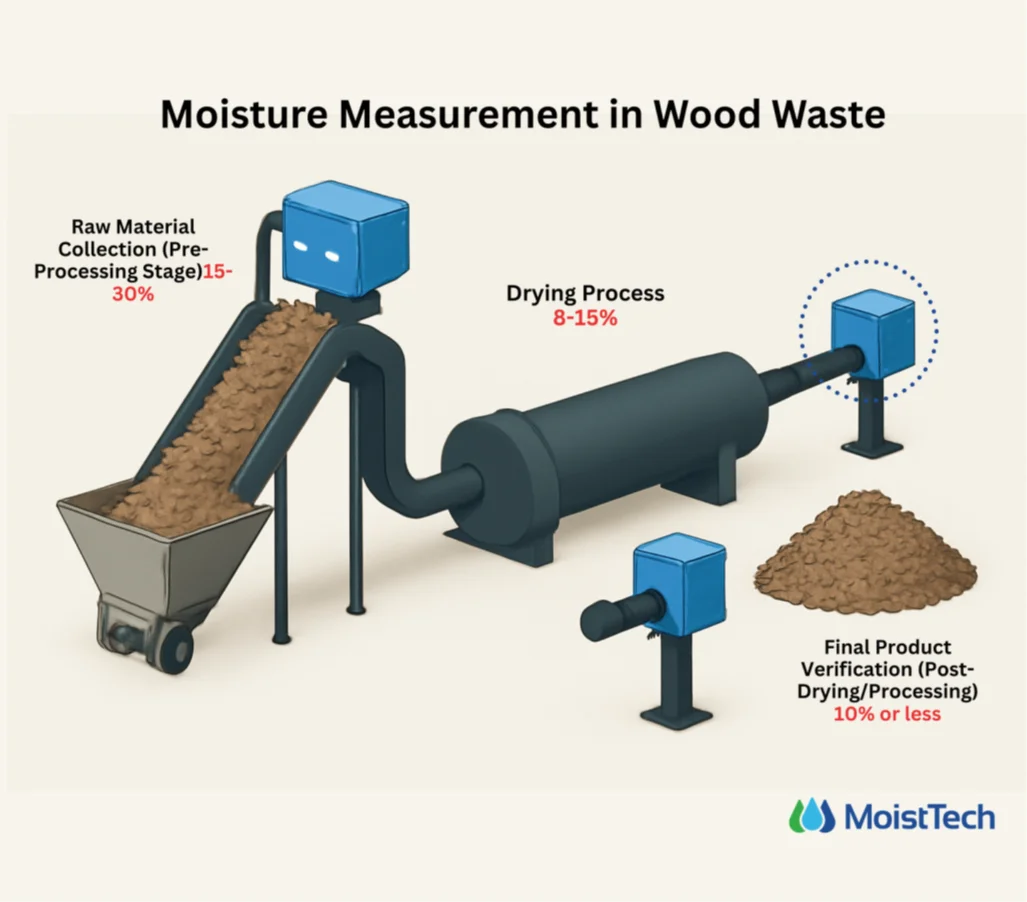
RECOMMENDED MEASUREMENT LOCATIONS
Raw Material Collection (Pre-Processing Stage)
Moisture Range: 15–30%
Sensor Placement: At the point of collection where raw wood waste such as sawdust, chips, and bark is received or stored.
Benefit: Ensures the wood waste has the correct moisture content before it enters further processing, helping prevent clumping and improve consistency in later stages.
Drying Process
Moisture Range: 8–15%
Sensor Placement: During the drying process, as the wood waste is exposed to heat to reduce moisture content.
Benefit: Continuous moisture monitoring helps ensure the wood waste is dried efficiently to the optimal moisture level for biomass energy production or composite material use.
Final Product Verification
Moisture Range: ≤ 10%
Sensor Placement: After the wood waste is dried or processed, just before it is used for energy production, recycling, or packaged for distribution.
Benefit: Verifies that the final product meets the required moisture specifications for its intended use, whether for combustion, composite board production, or composting.