
In manufacturing environments focused on lean manufacturing and sustainability, small variables often drive outsized consequences. Moisture content is one of them.
While it is sometimes treated as a downstream quality check, moisture is in fact a central process variable that directly influences energy consumption, material yield, product stability, and environmental impact. When managed precisely, it becomes a powerful lever for reducing waste, improving first pass yield, and supporting continuous improvement initiatives.
Across industries such as food processing, pulp and paper, ceramics, engineered wood, biomass, and chemicals, it is increasingly becoming clear that moisture control in manufacturing is not merely about compliance with specifications; it is about operational control, which is the foundation of both lean manufacturing and sustainability performance.
Moisture at the Intersection of Lean Efficiency and Sustainability
Lean manufacturing teaches that variation is the enemy of stability. Sustainability initiatives remind us that every resource carries an environmental cost. Moisture sits squarely at the intersection of both principles.
From a lean perspective, uncontrolled moisture introduces variability that leads to defects, rework, downtime, and overprocessing.
From a sustainability perspective, excess moisture increases energy consumption. Every additional pound of water removed requires heat, air movement, and time.
When manufacturers achieve precise moisture control, they can achieve both lean and sustainable manufacturing goals by:
- Producing within tighter specifications
- Reducing energy usage
- Maximizing material utilization.
The result is improved first pass yield and fewer lost resources. Moisture shifts from being a hidden liability to a controllable asset.
The Hidden Consequences of Uncontrolled Moisture
When moisture levels drift outside target ranges, the impact cascades across operations. Overdrying can cause brittleness, cracking, warping, or structural weakness, potentially causing:
- Product failure in ceramics and building materials
- Subpar sheet strength and weight in paper production
- Compromised texture or sensory quality in food
Underdrying presents different but equally serious risks:
- Microbial growth
- Reduced shelf stability
- Poor adhesion
- Incomplete curing
These can all result in product rejection or customer complaints.
There are also direct economic consequences. In weight sensitive industries, excess moisture can mean unintentionally giving away product. Conversely, over drying may reduce yield and shrink saleable output.
Energy inefficiency is often the largest hidden cost. To compensate for inconsistent moisture, operators frequently run dryers longer or at higher temperatures than necessary, consuming additional fuel or electricity, increasing emissions, and accelerating wear on burners, fans, and insulation systems.
In lean terms, uncontrolled moisture generates multiple forms of waste at once: defects, overprocessing, excess energy use, waiting, and rework.
Real-Time Moisture Measurement for Continuous Improvement
Continuous improvement depends on visibility. Improvement teams cannot reduce variation they cannot see.
Traditional methods of moisture control in manufacturing often rely on intermittent sampling or laboratory testing. By the time results are available, the process has already moved on. Defects may already be produced. Energy may already be consumed unnecessarily.
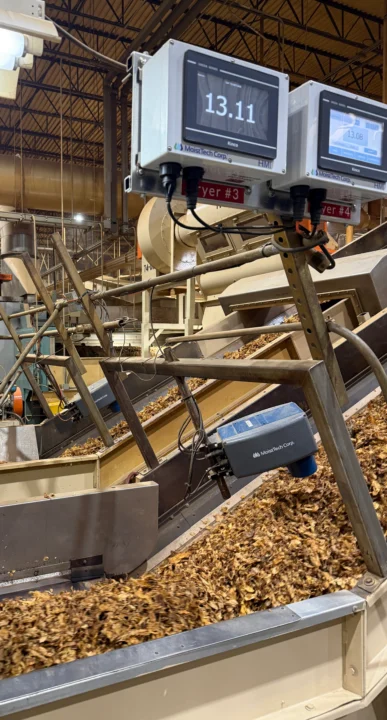
Real-time moisture measurement allow operators and improvement teams to identify variability trends before defects occur, validate process adjustments immediately, and establish stable operating windows. This supports core lean objectives such as waste reduction, process standardization, statistical process control, and continuous flow optimization. Instead of treating moisture as a delayed quality check, it becomes an active control parameter.
The benefits extend beyond process tuning. Abnormal moisture patterns can reveal equipment health issues such as airflow blockages, burner degradation, feed inconsistencies, or insulation failures. Rather than reacting to failures after quality problems appear, manufacturers can use moisture trends as early warning indicators. This reduces unplanned downtime, emergency repairs, and energy waste caused by inefficient equipment operation.
Quantifying Sustainability Gains Through Moisture Control
Manufacturers pursuing environmental targets often focus on high-level metrics such as energy intensity or carbon emissions. Moisture control directly influences both, producing the following sustainability benefits:
- Reduced energy consumption. By drying only to the required target, , manufacturers can shorten drying cycles and lower operating temperatures. Even small reductions in drying time can translate into significant annual energy savings.
- Lower carbon emissions. Reduced energy usage directly lowers carbon emissions in combustion-based drying systems.
- Less scrap and rework. Fewer rejected batches mean lower raw material use and less embodied energy wasted in defective products.
- Improved yield and reduced material giveaway. Accurate product weight control ensures the proper amount of product is given.
These measurable improvements align with corporate sustainability goals and ESG initiatives. More importantly, they create a direct, traceable link between process optimization and environmental impact.
Moisture Control That Works With Your Systems
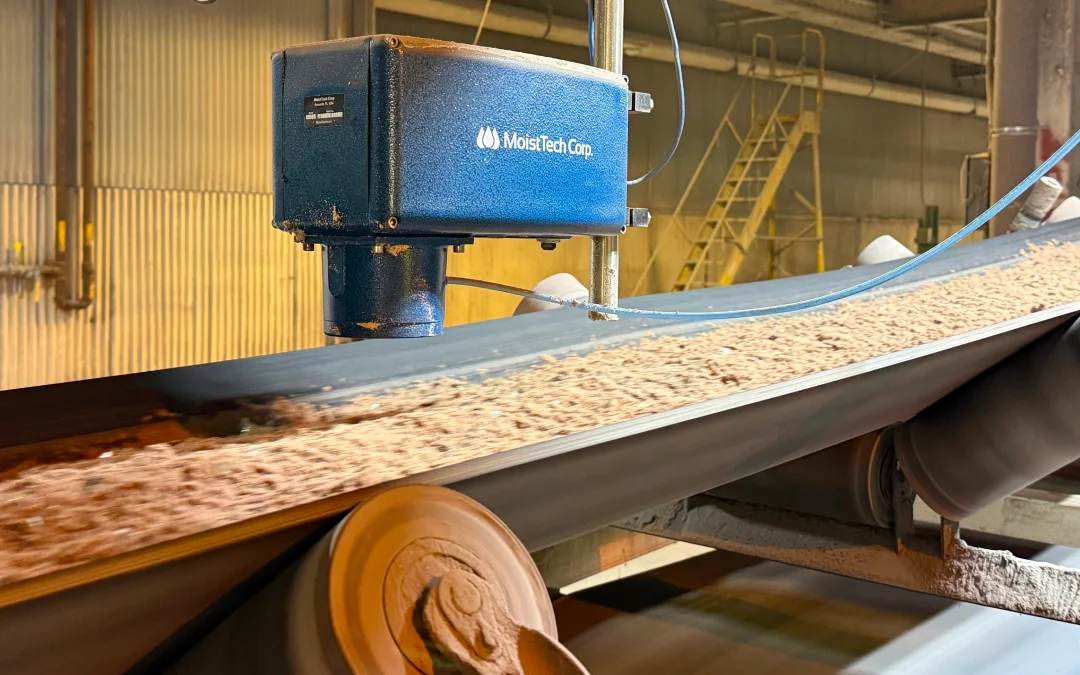
For moisture measurement to support lean and sustainability programs, it must integrate seamlessly into existing workflows. Modern non-contact systems are designed with this requirement in mind. Infrared-based sensors can mount above conveyors or production lines, continuously scanning product without physical contact. They integrate with existing PLC and SCADA systems and provide real-time feedback suitable for automated closed-loop control.
Because these systems require no consumables, no sample preparation, and minimal maintenance, they do not introduce process interruptions. Instead, they enhance operational visibility. Moisture monitoring data can be incorporated into lean dashboards, sustainability KPIs, Six Sigma initiatives, and energy management programs. Rather than adding complexity, it provides clarity.
Linking Lean Manufacturing and Sustainability
Lean manufacturing and sustainability are not competing priorities. Advanced non-contact moisture measurement technologies illustrate how process data can support both economic and environmental objectives.
Companies leveraging real-time infrared sensing solutions, such as those offered by MoistTech Corp., use continuous moisture data to maintain tighter drying control, reduce energy overuse, improve yield, and minimize scrap.
Moisture content may seem like a small variable, but in many industries, it determines how much energy is consumed, how much product is wasted, and how consistently performance targets are achieved. When measured continuously and controlled precisely, moisture becomes more than a quality parameter. It becomes a strategic lever for cost efficiency and environmental responsibility.
Get Real-Time Moisture Measurement
Contact MoistTech to learn more about how moisture control can help support your lean manufacturing and sustainability goals.