


Moisture Content in Biscuits & Oil

Overview
The analysis of raw ingredients and finished products in cracker and biscuit production is essential for maintaining product quality, consistency, and efficiency across the entire process.
By accurately measuring moisture and oil content in both incoming ingredients and finished goods, manufacturers can verify supplier quality, minimize rework, and reduce waste. Continuous, real-time measurement ensures that every product meets specification before it reaches packaging.
Why Measure Moisture
Accurate, real-time moisture monitoring delivers multiple process and product benefits.

Quality Assurance
Excess moisture leads to discoloration, poor texture, and reduced shelf life

Energy Efficiency
Uncontrolled oil content impacts flavor, appearance, and caloric consistency

Reduce Waste
Low moisture can result in brittleness and breakage

Process Stability
Real-time feedback allows operators to fine-tune the process immediately, reducing off-spec batches and rework
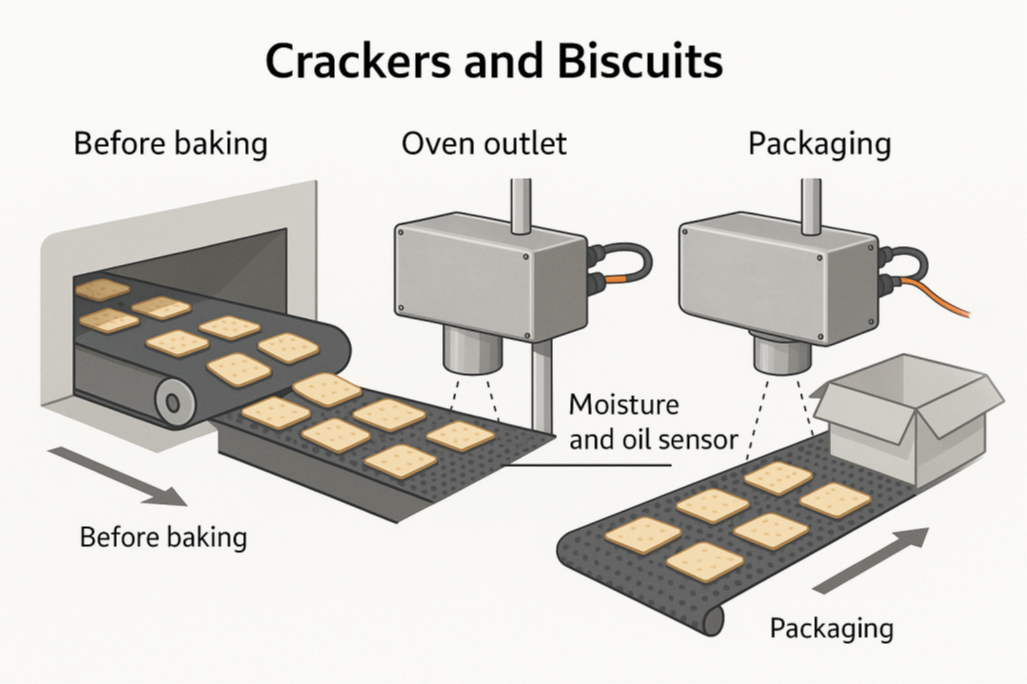
RECOMMENDED MEASUREMENT LOCATIONS
Moisture and oil levels are most effectively monitored:
- Before baking: to ensure proper dough conditioning and ingredient balance.
- After baking (oven outlet): to control drying, oil absorption, and product texture.
- Before packaging: allowing time for stabilization while preventing moisture
regain or oil loss.
This measurement strategy ensures that each stage of the production line remains
optimized for both process control and final product quality.
MOISTURE RANGES
- Incoming dough: Typically 15–25% moisture depending on recipe and formulation.
- Finished baked product: Target moisture between 1–3% to ensure crispness and shelf stability.
- Oil content: Typically ranges 10–20%, depending on product type and coating.
Understand the Process
See how our sensor works in real time on a similar application: