


Foundry Sand Moisture Testing
Contact Us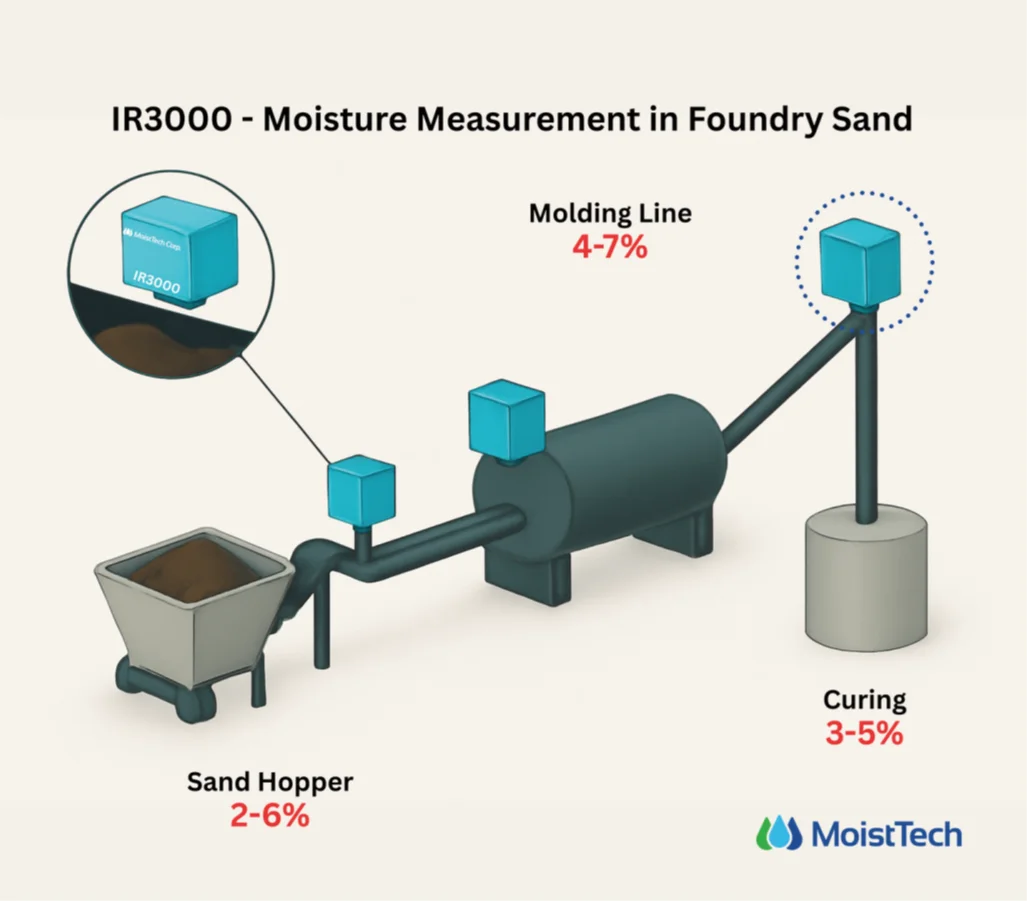

Overview
Foundry sand is a critical material used in the casting process to form molds for metal components, such as engine blocks, wheels, and machine parts. The proper moisture content in foundry sand ensures mold consistency, strength, and thermal conductivity, which are essential for producing high-quality castings.
Excess moisture in foundry sand can cause mold instability, defects in the cast metal, inconsistent flow properties, and excessive steam generation during pouring, leading to safety risks. Conversely, low moisture levels reduce mold strength and can cause cracking or shrinkage in the mold. MoistTech’s IR-3000 NIR moisture sensor provides continuous, non-contact moisture measurement during sand mixing, molding, and curing, allowing operators to achieve consistent sand properties and high-quality casting production.
Why Measure Moisture
Accurate, real-time moisture monitoring delivers multiple process and product benefits.

Quality Assurance

Energy Efficiency

Reduce Waste

Process Stability

Safety
RECOMMENDED MEASUREMENT LOCATIONS
Sand Hopper / Sand Mixing (Critical Control Point)
Measuring here ensures the proper moisture for:
- Uniform sand mixing
- Preventing clumping and bridging
- Achieving the right sand properties for molding
Typical moisture range: 2–6%. Monitoring at this point stabilizes the quality of the mixed sand and ensures proper flow into the mold-making equipment.
Molding Line / Sand Compaction (Critical Control Point)
Moisture content influences:
- Mold strength
- Moldability
- Consistency of casting surface
- Shrinkage and cracking risks
Typical moisture after molding: 4–7%. By measuring here, operators can adjust moisture for optimal compaction, minimizing material waste and improving mold quality.
Curing / Pre-Pouring Sand (Final Check)
Prior to metal pouring, it is essential to ensure that the sand maintains proper moisture levels for optimal mold strength and thermal conductivity. Overly dry or wet sand can cause inconsistent mold behavior during pouring, leading to defects in the castings. Typical moisture after curing: 3–5%. Measuring before the pouring phase ensures the molds are stable, safe, and ready for metal pouring.
Understand the Process
Product moisture content is an important factor for the facility to maintain to ensure the end product is top quality and energy usage is kept to a minimum.